The world´s most user-friendly statistical software, making complex models simple!
SmartPLS is a powerful software tool designed for Partial Least Squares Structural Equation Modeling (PLS-SEM), a statistical technique widely used in research and data analysis.
Partial Least Squares Structural Equation Modeling (PLS-SEM)
PLS-SEM is particularly useful when dealing with complex models, small sample sizes, or non-normally distributed data, making SmartPLS a go-to choice for researchers in various fields, including social sciences, business, and marketing.
Features & Benefits
SmartPLS offers a user-friendly environment for conducting structural equation modelling with a focus on PLS-SEM. Its features make it accessible to researchers and provide valuable insights into the relationships among variables in complex models, making it a valuable tool for empirical research and hypothesis testing in various fields.
Interface
Structural Equation Modelling
Path Analysis
Graph
User-Friendly Interface
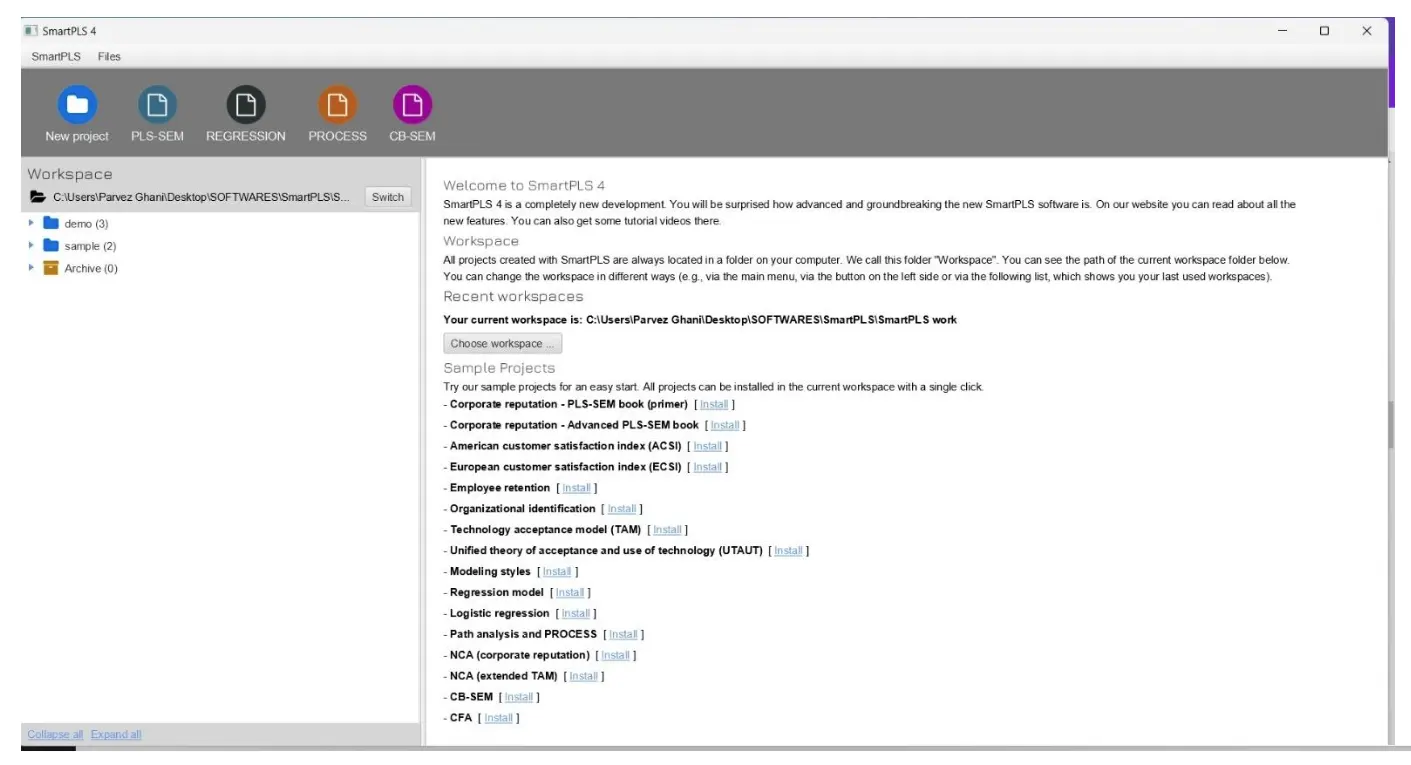
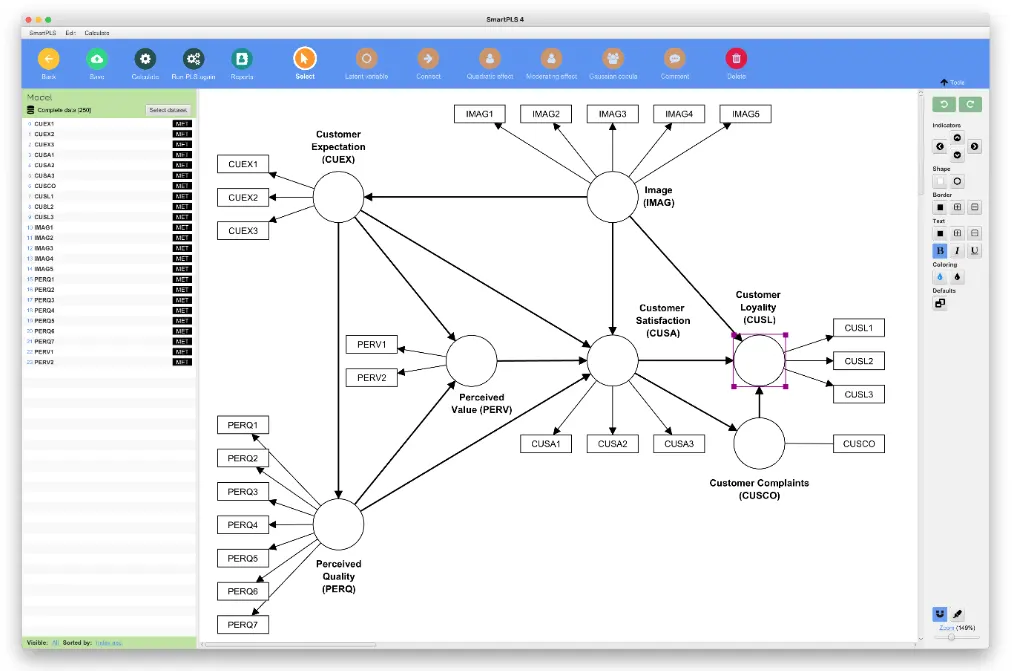
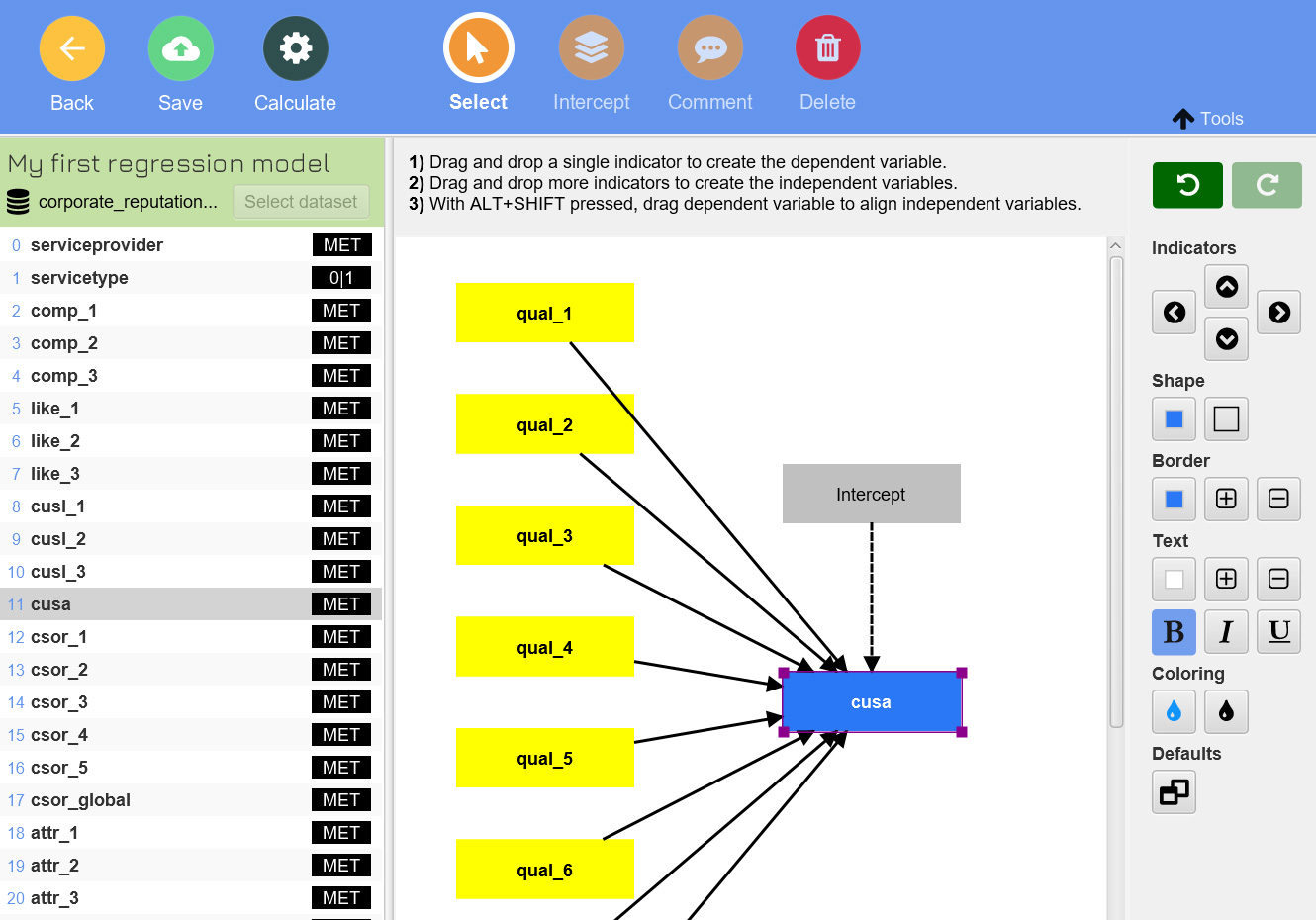
SmartPLS provides a user-friendly graphical interface, making it accessible to researchers with varying levels of statistical expertise. Users can create, modify, and visualize complex structural equation models using a drag-and-drop approach.
Partial Least Squares (PLS) Method
SmartPLS employs the PLS-SEM method, which is suitable for models with small sample sizes, non-normal data, and complex relationships. PLS-SEM allows for the analysis of both the measurement and structural model simultaneously.
Measurement Model Assessment
The software helps in the assessment of the measurement model, including the evaluation of factor loadings, composite reliability, and average variance extracted (AVE). Users can assess the quality of measurement and make improvements to their model.
Structural Model Specification
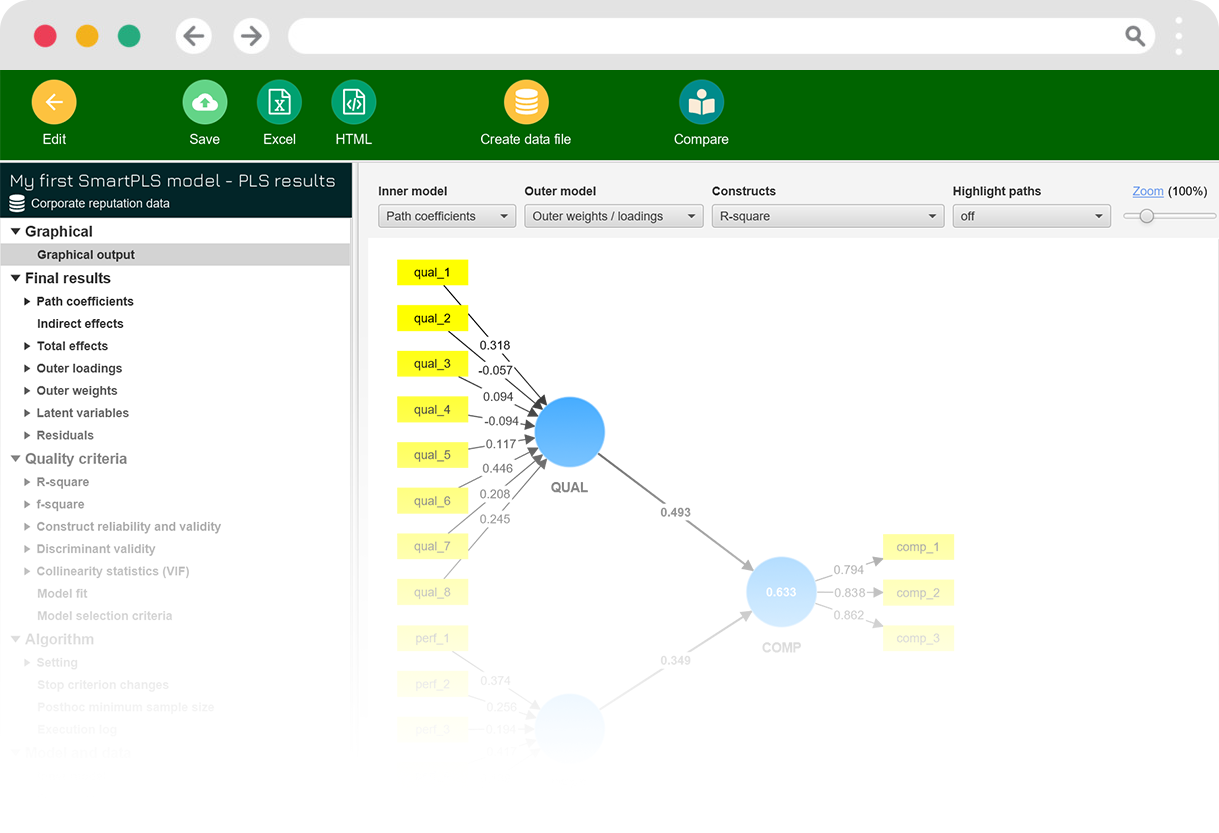
SmartPLS allows researchers to specify and estimate relationships between latent variables in the structural model. It provides insights into the strength and significance of these relationships.
Bootstrapping
The software employs bootstrapping to generate resampled datasets and calculate robust standard errors and p-values for path coefficients. This feature helps researchers assess the statistical significance of relationships in their models.
Graphical Representation
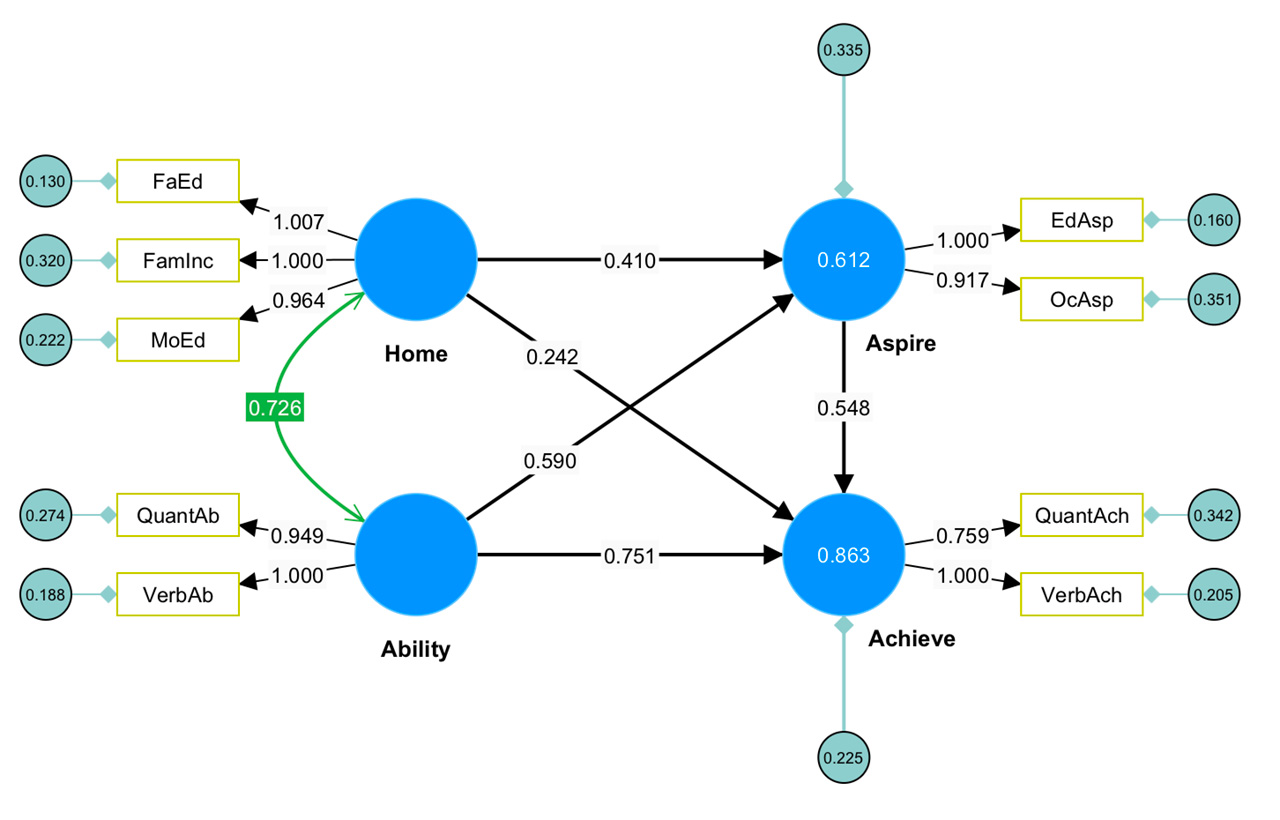
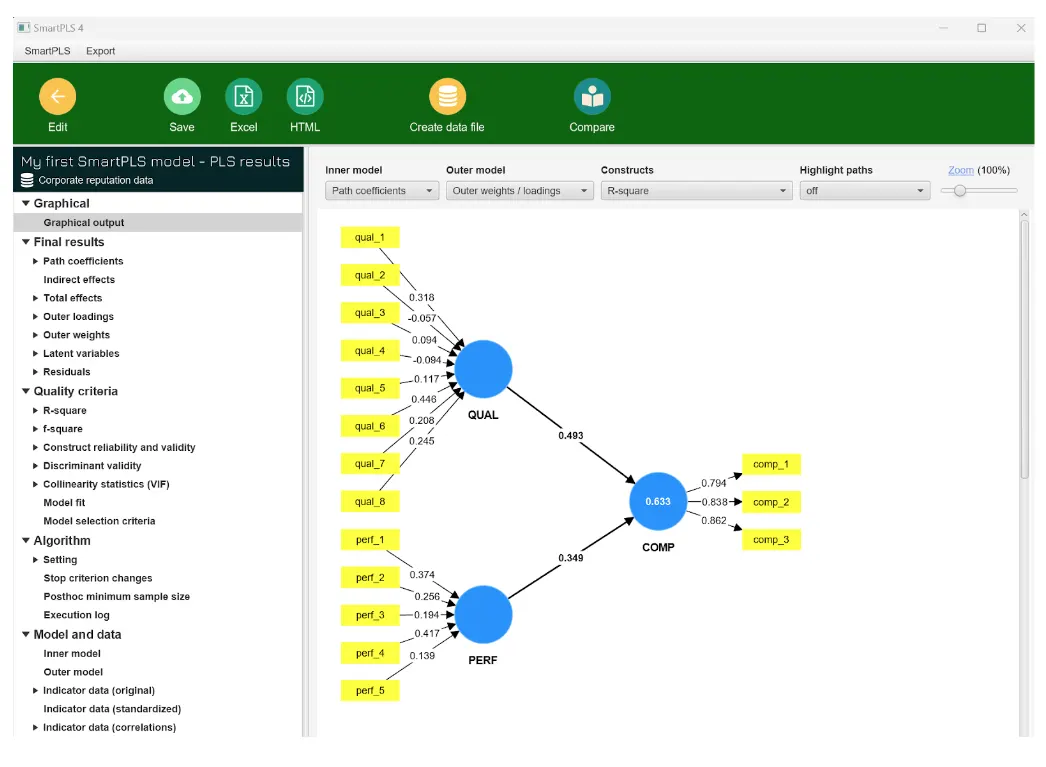
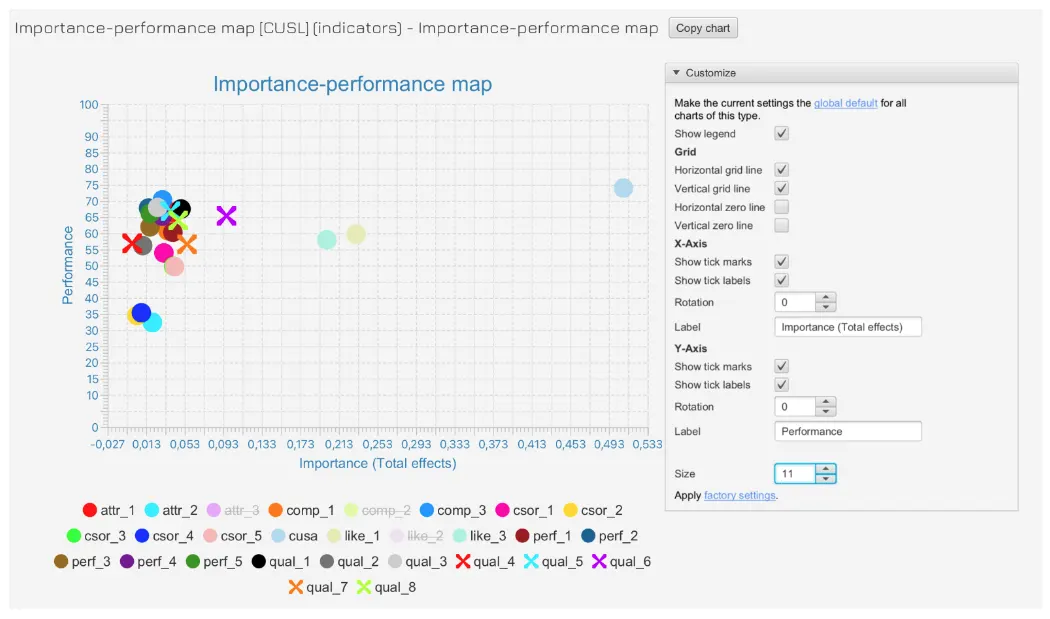
The software provides various graphical tools to visualize and interpret the results and the model structure. Visual representations aid in the communication of research findings.
Non-Normal Data Handling
PLS-SEM is known for its robustness in handling non-normally distributed data and is a suitable choice when data does not meet traditional assumptions.